What is TDS?
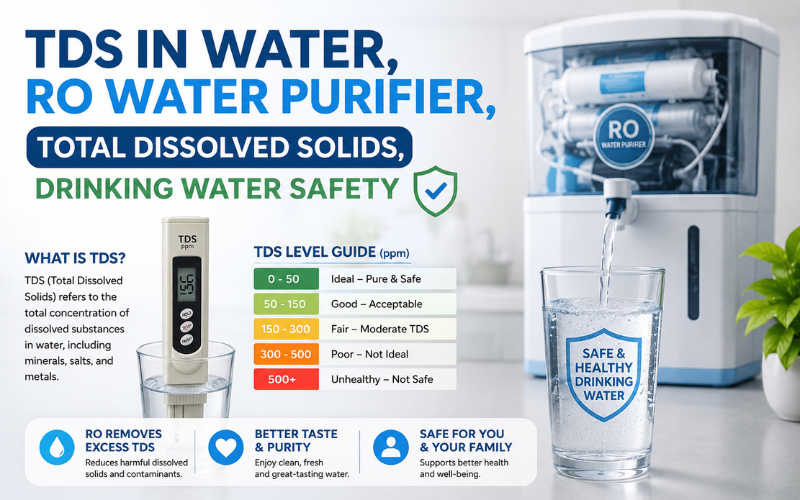
TDS stands for Total Dissolved Solids. It refers to the total concentration of dissolved substances in water. These substances include minerals, salts, metals, and organic matter that are dissolved at a molecular level. TDS is usually measured in milligrams per liter (mg/L) or parts per million (ppm). Common components of TDS include calcium, magnesium, sodium, potassium, bicarbonates, chlorides, and sulfates. TDS in Drinking Water In the context of drinking water, TDS plays a crucial role in determining water quality and taste. Low TDS (below 50 ppm): Water may taste flat and lack essential minerals Moderate TDS (50–300 ppm): Ideal for drinking, balanced minerals and good taste High TDS (above 500 ppm): May taste salty or bitter and could indicate contamination While TDS itself is not always harmful, extremely high levels may indicate the presence of harmful contaminants.
What is TDS in RO Water Purifiers?
RO (Reverse Osmosis) systems are designed to reduce TDS levels in water by forcing it through a semi-permeable membrane. RO removes up to 90–99% of dissolved solids It eliminates harmful substances like lead, arsenic, nitrates, and excess salts Modern RO systems often include TDS controllers to retain essential minerals This is why RO purifiers are commonly used in areas where water has high TDS levels. How TDS Affects Our Daily Life TDS impacts more than just drinking water—it affects multiple aspects of everyday life:
1. Health and Hydration Water with balanced TDS provides essential minerals like calcium and magnesium, which are important for bones and overall health.
2. Taste of Food and Beverages High TDS water can alter the taste of tea, coffee, and cooked food. Low TDS water may make them taste bland.
3. Household Appliances Water with high TDS causes scaling in appliances like: Water heaters Electric kettles Washing machines This reduces efficiency and lifespan.
4. Skin and Hair Hard water (high TDS) can: Cause dry skin Make hair rough and dull Reduce soap effectiveness
5. Plumbing and Maintenance High TDS water leads to mineral buildup in pipes, increasing maintenance costs and reducing water flow over time.
Is High TDS Always Bad?
Not necessarily. Some dissolved minerals are beneficial. However, very high TDS levels can: Indicate pollution or contamination Affect taste and odor Cause long-term health concerns if toxic elements are present The key is maintaining a balanced TDS level. Ideal TDS Level for Drinking Water According to general guidelines: 50–150 ppm: Excellent 150–300 ppm: Good 300–500 ppm: Acceptable Above 500 ppm: Not recommended without treatment Conclusion TDS is an important indicator of water quality that affects your health, appliances, and daily comfort. While not all dissolved solids are harmful, maintaining the right balance is essential. RO water purifiers play a major role in managing TDS levels, especially in areas with poor water quality. Understanding TDS helps you make better decisions about the water you drink and use every day.