Introduction
Clean drinking water is essential, especially in regions facing increasing water pollution. Reverse Osmosis (RO) systems are widely used, but questions remain about their impact on health and the environment. This guide breaks down the facts.
What is RO Water?
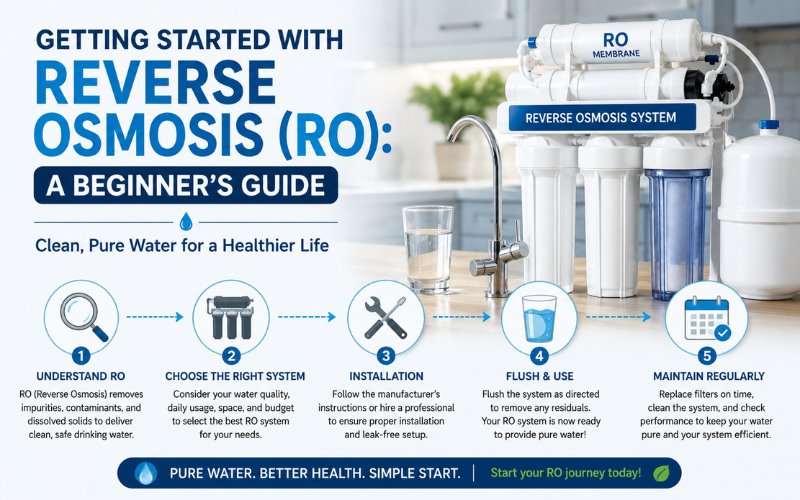
RO (Reverse Osmosis) is a purification process that removes dissolved salts, chemicals, and contaminants from water using a semi-permeable membrane.
Is RO Water Safe for Health?
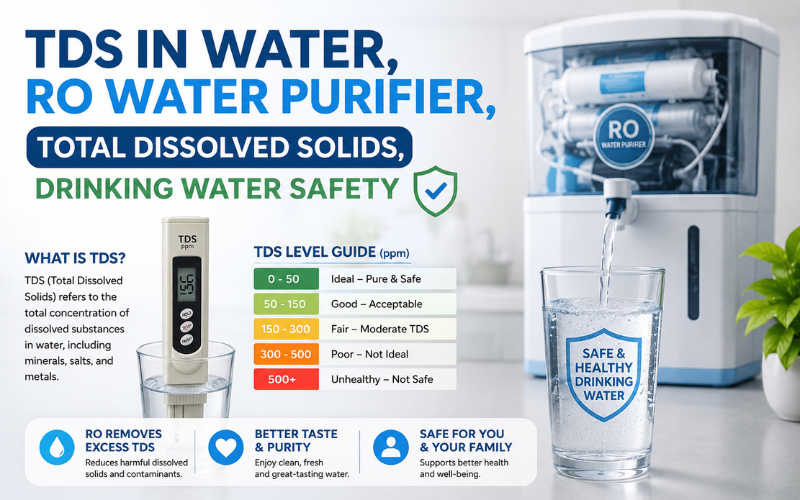
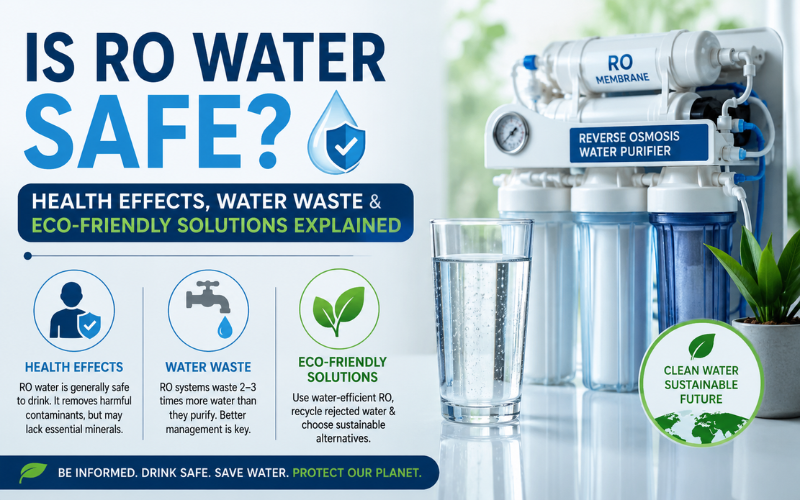
Benefits: Removes harmful contaminants like lead, arsenic, and bacteria Improves taste and odor Suitable for areas with high TDS (Total Dissolved Solids) Concerns: Removes essential minerals like calcium and magnesium Very low TDS water may not be ideal for long-term consumption
Tip: Choose RO systems with a mineralizer to balance essential nutrients.
Environmental Impact of RO Systems
One of the biggest criticisms of RO systems is water wastage. For every 1 liter of purified water, 2–3 liters may be wasted Increased water demand can strain local resources Disposal of reject water contributes to environmental stress
How to Reuse RO Wastewater Instead of letting wastewater go to waste, you can reuse it:
- Cleaning floors and bathrooms
- Watering plants (non-edible plants preferred)
- Washing vehicles
- Laundry pre-wash These small steps can significantly reduce water wastage.
Eco-Friendly Alternatives & Improvements
Use low-waste or zero-waste RO systems Install dual water outlets (drinking + utility use) Combine RO with other purification methods where possible Regular maintenance improves efficiency and reduces waste
🇮🇳 Water Quality Awareness in India
In many parts of India, groundwater contamination is a serious issue. However, not all households require RO systems.
Always test your water before choosing a purifier.
Conclusion RO water is safe when used correctly, especially in areas with poor water quality. However, being mindful of mineral balance and water wastage is crucial. With smarter usage and eco-friendly practices, RO systems can be both effective and sustainable.